Robotics has become a driving force behind modern industry, transforming manufacturing, logistics, healthcare, and many other sectors. Robots are capable of performing repetitive, precise, and hazardous tasks with efficiency and accuracy that surpass human capabilities. As technology advances, robots are no longer limited to assembly lines; they are increasingly integrated into complex workflows, decision-making processes, and even human-robot collaboration. The rise of robotics is reshaping industries, improving productivity, and redefining the future of work.
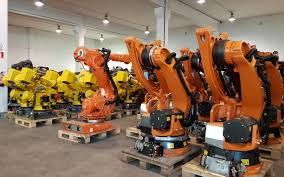
In manufacturing, robotics has revolutionized production processes. Industrial robots can handle tasks such as welding, painting, assembling, and quality control with exceptional precision. Companies such as Toyota and Fanuc have implemented robotic systems extensively, reducing production errors, increasing output, and lowering operational costs. Automated assembly lines enable factories to operate 24/7, ensuring consistent product quality and faster time-to-market for goods.
Logistics and supply chain operations also benefit significantly from robotics. Automated guided vehicles (AGVs) and robotic sorting systems streamline warehouse operations, reducing manual labor and increasing efficiency. Companies like Amazon and DHL have adopted robotics to manage large-scale fulfillment centers, optimizing inventory management and accelerating order processing. Robots can handle heavy loads, navigate complex layouts, and work alongside human operators safely.
Healthcare is another sector witnessing the impact of robotics. Surgical robots, such as those developed by Intuitive Surgical, allow surgeons to perform minimally invasive procedures with precision and control. Robots are also used in rehabilitation, patient monitoring, and laboratory automation. They can assist with repetitive tasks, such as dispensing medication or preparing samples, enabling medical staff to focus on patient care and complex decision-making.
Agriculture is increasingly adopting robotics to improve productivity and sustainability. Robotic harvesters, drones, and automated irrigation systems help farmers monitor crops, optimize yields, and reduce resource consumption. Precision agriculture, powered by robotics and IoT technology, allows for more efficient planting, fertilizing, and harvesting practices, minimizing environmental impact while maximizing output. Companies such as John Deere are leading the integration of robotics into modern farming practices.
Despite the benefits, robotics presents challenges for the workforce and society. Job displacement is a significant concern, particularly in industries that rely on repetitive manual labor. Workers need to adapt by acquiring new skills in programming, robotics maintenance, and system management. Educational institutions and governments play a crucial role in reskilling programs to ensure that employees remain competitive in an increasingly automated economy.
Safety and ethical considerations are also critical in robotics adoption. Human-robot collaboration requires strict safety protocols to prevent accidents. Additionally, as robots become more autonomous and integrated into decision-making processes, questions arise regarding accountability, liability, and ethical use. Transparent guidelines and regulations are essential to ensure responsible deployment of robotic technologies.
The future of robotics involves greater integration with artificial intelligence, machine learning, and IoT systems. Intelligent robots will not only perform tasks but also analyze data, make decisions, and adapt to changing conditions. Collaborative robots, or “cobots,” are designed to work alongside humans, combining the strengths of both human judgment and robotic precision. This collaboration will redefine workplace dynamics and open opportunities for innovation across industries.
In conclusion, robotics is reshaping the future of industry by enhancing efficiency, precision, and safety. From manufacturing and logistics to healthcare, agriculture, and beyond, robots are transforming workflows and enabling new capabilities. While challenges related to workforce adaptation, ethics, and safety remain, the potential benefits are immense. As technology continues to advance, robotics will play an increasingly central role in shaping the industrial landscape and the way humans work, interact, and innovate.