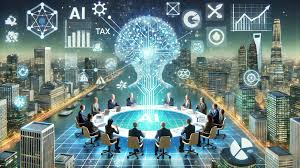
Artificial intelligence (AI) has emerged as one of the most transformative technologies of the 21st century. By simulating human intelligence in machines, AI enables systems to learn, reason, and make decisions with remarkable efficiency. From self-driving cars and virtual assistants to healthcare diagnostics and financial analytics, AI is reshaping industries, improving productivity, and creating new opportunities. Its influence extends across society, driving innovation while raising important ethical, economic, and social considerations.
One of the most visible applications of AI is in everyday consumer technology. Virtual assistants like Apple’s Siri, Amazon’s Alexa, and Google’s Assistant use natural language processing to understand user commands, answer questions, and perform tasks. These AI systems make daily routines more convenient, from managing schedules and controlling smart home devices to providing real-time information. AI personalization also enhances online experiences, with streaming platforms, e-commerce websites, and social media networks recommending content based on user behavior.
Healthcare is another area where AI is having a transformative impact. Machine learning algorithms analyze large datasets of medical records, imaging scans, and genetic information to identify patterns that may indicate disease. AI-powered diagnostic tools can detect conditions such as cancer or cardiovascular disease with remarkable accuracy, often earlier than human clinicians. Hospitals use AI for patient monitoring, predictive analytics, and operational optimization, improving patient care and reducing costs. Robotic-assisted surgeries further demonstrate how AI can enhance precision and efficiency in critical medical procedures.
The transportation sector is also being revolutionized by AI. Autonomous vehicles rely on AI algorithms to interpret sensor data, recognize objects, and make real-time driving decisions. Companies such as Tesla and Waymo are leading efforts to develop self-driving technology, which promises to reduce accidents, improve traffic efficiency, and transform urban mobility. AI is also applied to logistics, route optimization, and predictive maintenance, making transportation systems smarter and more reliable.
AI is increasingly shaping the business landscape as well. Companies leverage AI for predictive analytics, demand forecasting, customer insights, and process automation. In financial services, AI algorithms detect fraudulent transactions and assess credit risk more accurately than traditional methods. Marketing teams use AI to personalize campaigns, analyze customer sentiment, and optimize engagement. By automating routine tasks and providing actionable insights, AI enhances productivity and enables human workers to focus on strategic and creative roles.
Education is another domain benefiting from AI. Adaptive learning platforms use AI to assess student performance and tailor lessons to individual needs, enabling personalized learning experiences. Virtual tutors, intelligent grading systems, and content recommendation engines make education more efficient and engaging. In remote learning environments, AI supports real-time feedback and interactive experiences, helping students learn at their own pace while allowing teachers to monitor progress effectively.
Despite its benefits, AI also presents significant challenges. Ethical concerns include bias in algorithms, privacy violations, and potential misuse of AI for surveillance or misinformation. Machine learning systems are only as good as the data they are trained on, and biased or incomplete datasets can lead to unfair outcomes. Transparency and accountability are critical to ensuring that AI technologies are deployed responsibly.
The economic impact of AI is another key consideration. While AI increases productivity, it also raises concerns about job displacement, especially in roles involving routine or repetitive tasks. Governments, businesses, and educational institutions must invest in workforce reskilling and lifelong learning programs to prepare employees for AI-driven economies. Collaboration between humans and machines, rather than replacement, will be essential to maximize the benefits of AI while minimizing social disruption.
Looking ahead, AI will continue to expand into new domains. Emerging areas include AI-driven creativity, such as music composition, visual arts, and content generation, as well as complex problem-solving in climate science, energy management, and healthcare research. Integration with other technologies, such as robotics, IoT, and quantum computing, will further enhance AI’s capabilities and influence.
In conclusion, artificial intelligence is transforming industries, society, and daily life by enabling machines to perform tasks with intelligence, efficiency, and adaptability. Its applications range from consumer technology and healthcare to transportation, business, and education. While ethical, economic, and societal challenges must be addressed, the potential of AI to drive innovation and improve human life is immense. As technology continues to evolve, AI will remain a central force shaping the future of the digital world.